Player development
How to Set Soccer Development Goals: Examples and a Player Template
Set useful soccer development goals with practical examples, a player template and simple review questions for players, parents and coaches.
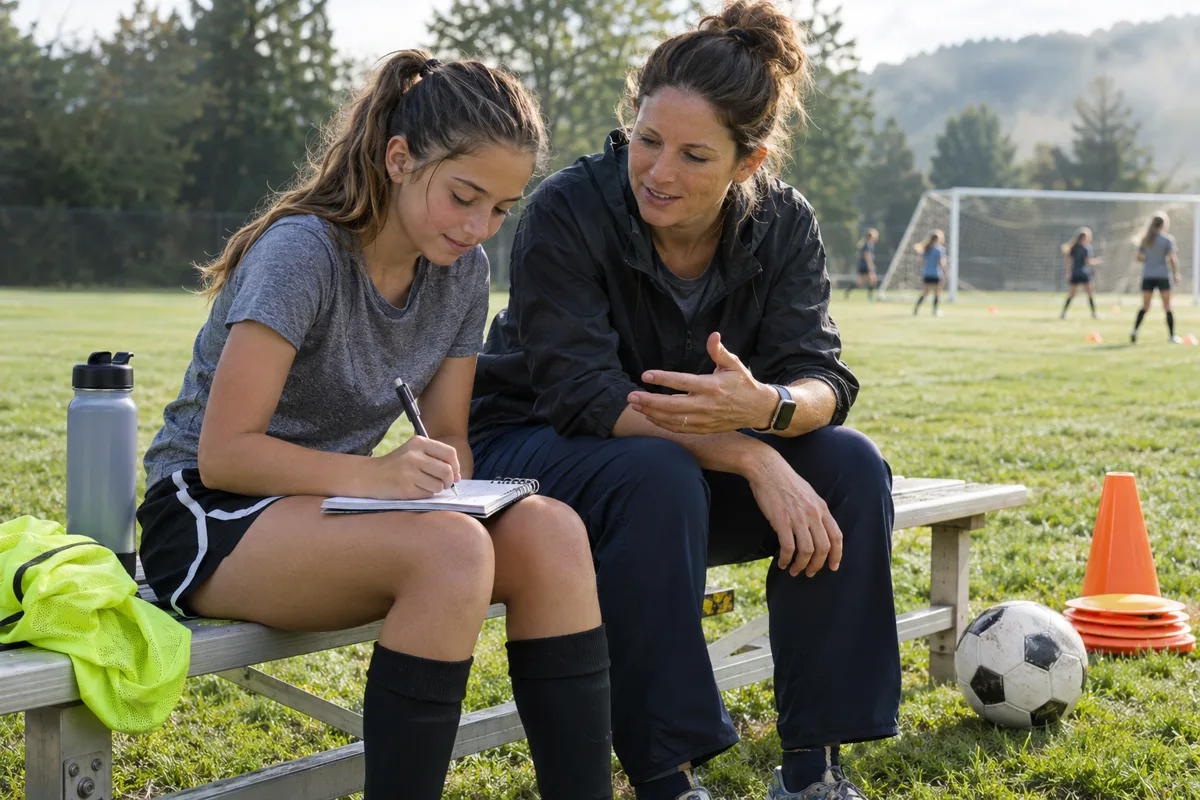
A useful soccer development goal describes an action you can practice, where you will try it and how you will review what happened. “Become a better player” is a starting ambition. “Check for pressure before receiving during possession practice, then discuss two examples with my coach” gives you a next step.
This guide shows players, parents and coaches how to turn match observations into manageable soccer goals, with examples and a simple review template.
Choose one part of your game
Start with a recent practice, match or conversation with your coach. Identify one situation that keeps coming up. Perhaps you receive the ball without knowing where pressure is, stop moving after passing or struggle to explain your decisions during a review.
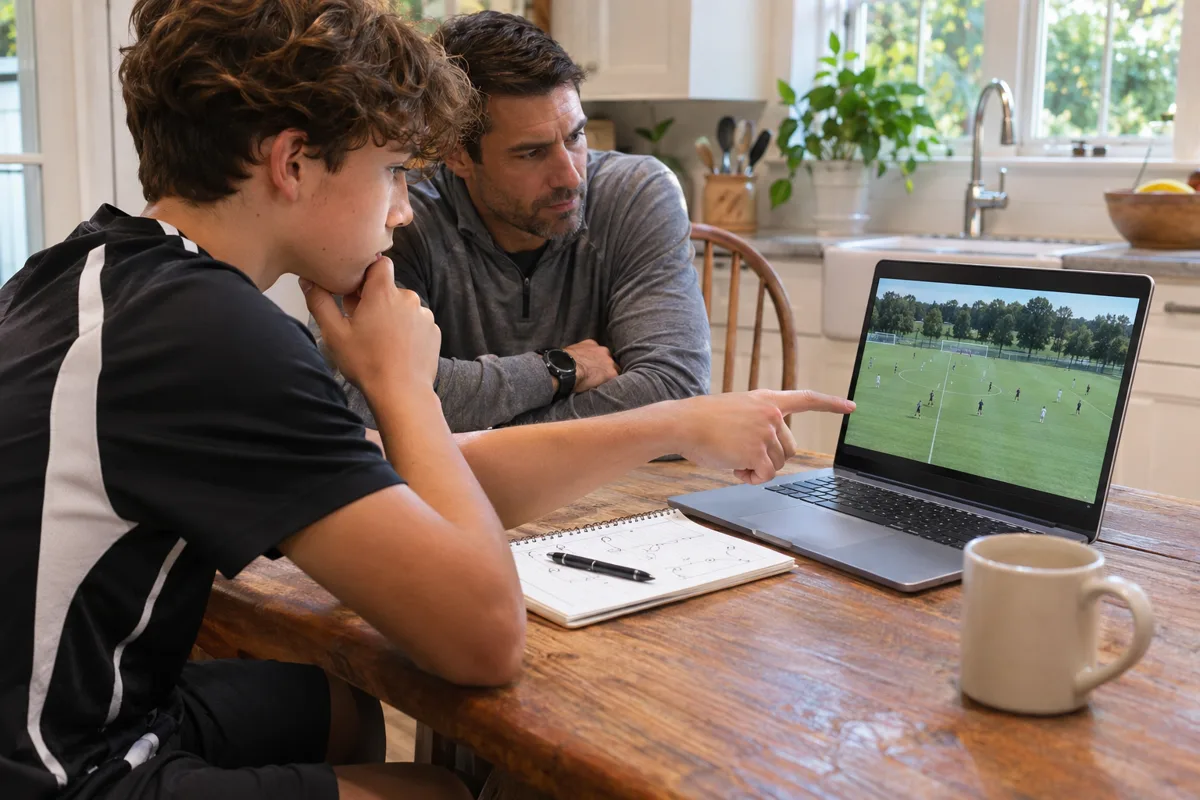
Use our soccer game-film checklist to find examples if you have footage you are permitted to watch. If you do not have video, write a short note after practice and ask your coach whether the pattern matches what they see.
Choose a focus that fits your role and team’s approach. You do not need to work on every weakness at once.
Separate outcomes from actions
Winning, scoring and earning a place on a team can matter to players, but they depend on other people and circumstances. Build your practice goal around something you can attempt and discuss.
- Instead of “score every game”: work with your coach on recognizing when to attack a useful space in the box.
- Instead of “never lose possession”: look for pressure and choose a first touch that supports your next action.
- Instead of “get selected”: prepare for sessions, apply feedback and review a specific part of your performance.
An action goal does not guarantee a result. It makes the work clearer and gives you something useful to review even after a difficult game.
Write a soccer goal in four parts
Use this sentence: “In [situation], I will practice [action]. I will review [evidence] with [person or method] on [date].”
For example: “In possession practices, I will look for nearby pressure before receiving. On Sunday, I will review two moments in my notes and ask my coach what I could notice earlier.”
- Situation: Name the activity or match moment.
- Action: Describe what you want to try.
- Evidence: Decide what you can observe without guessing.
- Review: Set a realistic time to reflect and adjust.
Keep the wording short enough to remember on the field. Let the player help write it rather than handing them an adult’s list of instructions.
Soccer development goal examples
These examples are prompts to discuss with a coach, rather than instructions that suit every player or tactical system.
Technical goal: first touch
“During receiving activities, I will choose a first touch based on where pressure and space are. After practice, I will note one touch that helped and one I would change.”
Tactical goal: supporting after a pass
“After passing in small-sided practice, I will look for a useful new supporting position. I will ask my coach to help me compare two examples at the end of the week.”
Communication goal: useful information
“In team practices, I will give teammates clear, relevant information when I can see something they cannot. I will ask a teammate which messages helped.”
Reflection goal: responding to a mistake
“After an error, I will focus on my next responsibility in the game. Afterward, I will write down one example of how I rejoined the play.”
Goalkeeper goal: involvement with the team
“During team practices, I will discuss my starting position with the goalkeeper coach as possession moves up the field. I will review two situations and ask what information should guide my position.”
Avoid rigid targets that encourage an action when it does not fit the game. A player should not force a weak-foot pass or shout unnecessarily just to reach a number.
Build a small practice and review cycle
Agree on the focus with your coach, try it in the relevant activity and make a brief note afterward. At the next review, ask:
- What did I actually try?
- Which situation made it easier or harder?
- What example shows progress or a question?
- Should I keep, simplify or change the goal?
You can use a week as a convenient review period, but it is not a deadline for mastering a skill. Some goals need longer, and some need changing once you understand the situation better.
If the goal requires extra practice, ask your coach how it fits with your existing schedule. More activities are not automatically a better plan.
Use this player goal-setting template
Copy these prompts into a notebook or your own development record:
- My focus: One situation I want to handle better.
- Why it matters: How it helps my contribution to the team.
- My action: What I will try.
- Practice setting: Where I can work on it.
- Evidence: A note, timestamp or coach observation.
- Review date: When I will reflect.
- Next decision: Keep, simplify or change.
For example: “My focus is supporting after a pass. It helps the ball carrier have another option. I will practice finding a new passing lane in small-sided games and discuss one example with my coach on Friday.”
How parents can support the goal
Ask the player what they are working on and whether they want help keeping a record. A useful question after a match is “Did you get a chance to try your focus?” Let their answer guide the conversation.
Avoid treating the goal as a scorecard for the car ride home. Players may need time before discussing a difficult match. Keep communication with the coach constructive and follow the team’s process for questions.
Recognize preparation, honest reflection and an attempt to use feedback. Those are concrete contributions even when the match result is disappointing.
Keep the goal with your player profile
Prospect XI provides private player-profile tools within Soccer Network Hub, including a current development goal. You can update the saved goal as your focus changes. Keep dated review notes in your notebook or other record if you want a history of your observations.
The profile does not automatically assess your ability, analyze footage or verify progress. See how to create a soccer player profile for help organizing accurate playing information.
For additional planning tools, explore the Passionate Soccer Coach resource library.
Frequently asked questions
How many soccer goals should a young player set?
Start with one clear focus that the player understands. Add another only if it remains manageable and fits the coach’s guidance.
Should a goal include a number?
A number can help when the observation is meaningful and practical to record. Do not choose a target that encourages players to force an action regardless of the situation.
What if the player does not meet the goal?
Look at what happened before judging the effort. The goal may be too broad, the practice setting may not offer enough opportunities or the player may need a clearer cue from the coach. Adjust the plan.
Can beginners use development goals?
Yes. Use simple language and a familiar situation, such as offering a passing option or understanding a practice instruction. The player should be able to explain the focus in their own words.
Choose your next action
Write one goal, discuss it with your coach and set a review date. Keep one example that helps you understand your progress. You can use the private player profile editor to save your current focus and return to it as your game develops.